

Energy & Process Optimisation in Packaging Manufacturing
Smarter Processes. Safer Packaging. Lower Energy Costs.
Packaging manufacturing demands accuracy across every stage of production. For flexographic, Rotogravure and Coating drying processes, to solvent monitoring and environmental abatement, inefficient processes can increase energy costs, create safety risks and affect production performance.
At Process Energy, we help packaging manufacturers see what’s really happening across their processes. We combine process optimisation, energy reduction and specialist LEL solvent monitoring to identify inefficiencies, improve process control and strengthen regulatory compliance and safety.
With over 90 years of industrial energy expertise, our engineers don’t stop at identifying problems. We measure performance on site, develop practical solutions and can design, build, and commission improvements that deliver measurable results.
Where Packaging Processes Can Perform Better
Packaging production involves highly specialised equipment and thermal processes. Optimising dryer settings, exhaust airflows, and the interaction between thermal systems can uncover energy reduction opportunities.
Printing and Coating: Press dryers can consume significant amounts of energy when airflow, temperature, recirculation or damper settings aren’t properly controlled. Assessing these systems under real production conditions can uncover unnecessary energy use while improving the drying conditions for better product quality.
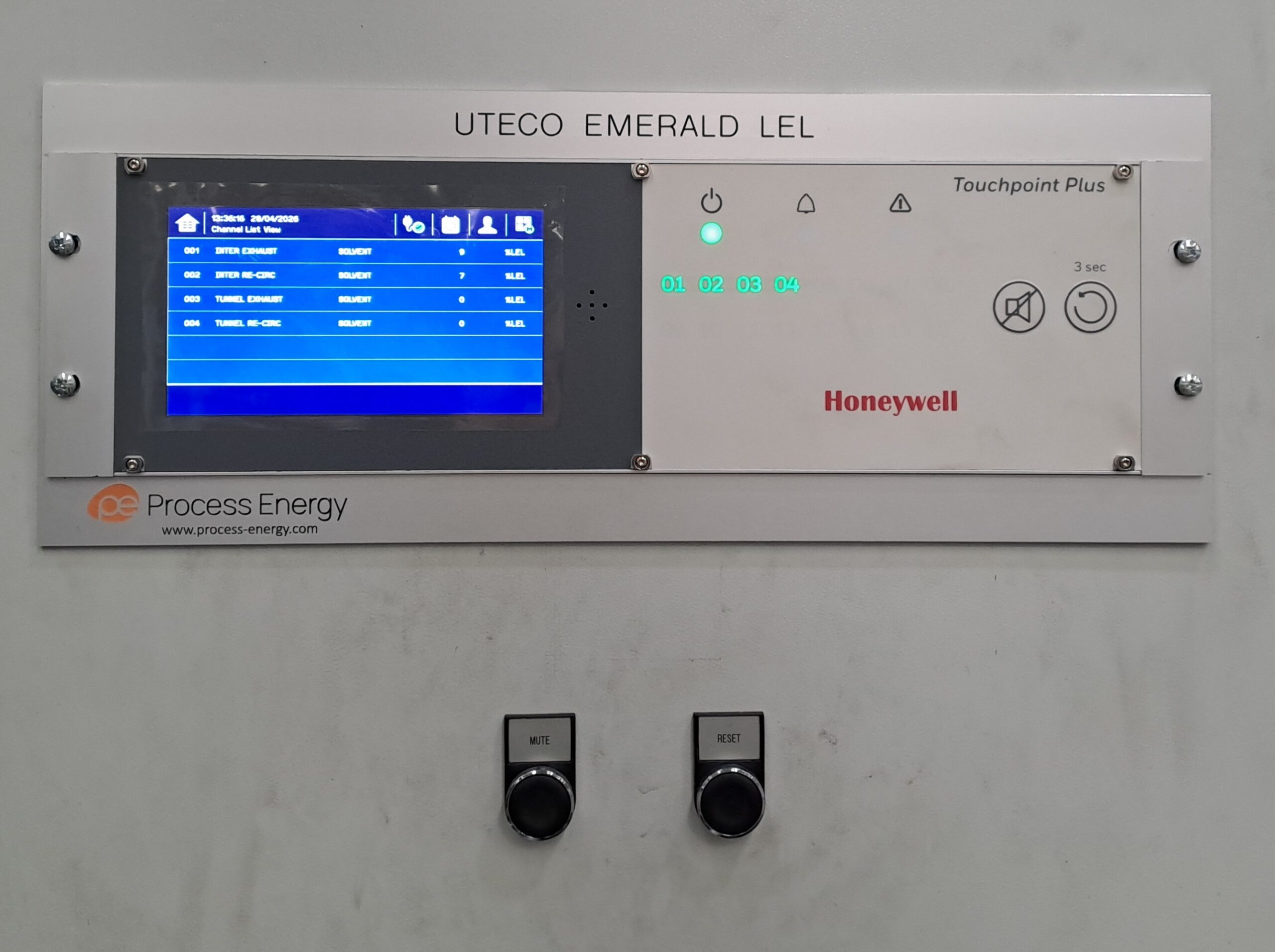
LEL Solvent Monitoring: For printing and coating systems using solvent-based inks or coatings, accurate LEL monitoring is critical to safe dryer operation, alongside complying with the Industrial Emissions Directive. Process Energy can assess existing monitoring systems and implement reliable monitoring that provides the control system with consistent solvent concentration data.
Solvent Emission Control: Where flexible packaging manufacturing involves solvent-based inks or coatings, Regenerative Thermal Oxidisers (RTO) can be excessive energy gobbling black holes. Optimising dryer exhaust volumes and solvent concentration can reduce the fuel required, while creating opportunities to recover surplus heat.
Thermal Oil Process Heating: Centralised thermal-oil systems can replace multiple individual press burners, reducing total gas input while simplifying service and maintenance. They can also provide an effective route for integrating recovered heat back into the production process.
Project Highlight: From Energy Assessment to Measurable Results
Energy and process improvements need to deliver more than theoretical savings. Here’s what we achieved for a global packaging manufacturer through implementing dryer optimisation and a RTO heat recovery system:
- £375K annual gas and electricity cost savings
- 68% reduction in gas demand
- 3 years ROI
The project addressed ageing thermal infrastructure, uncontrolled press dryer operation, unreliable LEL monitoring and high gas demand from the RTO system. Process Energy developed a programme combining press dryer optimisation and LEL monitoring upgrades with centralised thermal-oil heating, RTO exhaust control and heat recovery.
Frequently Asked Questions
What machinery and processes can Process Energy optimise in packaging manufacturing ?
Process Energy can assess packaging-specific processes including flexographic, rotogravure and coating printing presses, press dryers, solvent monitoring systems and, where relevant to flexible plastic packaging, regenerative thermal oxidisers (RTOs). We look at how equipment performs under real production conditions to identify opportunities to improve process control, reduce energy use and maintain reliable output.
Why is LEL solvent monitoring important in plastic packaging?
LEL (Lower Explosive Limit) monitoring measures solvent concentrations within processes where solvent-based inks or coatings are used. Reliable monitoring provides the dryer control system with accurate information, helping manage solvent levels safely and support effective process control. Process Energy can assess existing LEL monitoring systems and implement upgrades.
How can flexible packaging manufacturers reduce energy use in drying and thermal oxidisation?
Drying and solvent abatement can create significant energy demands in flexible packaging production. Optimising dryer airflow, recirculation and exhaust control can reduce the volume of fumes sent to an RTO, while increasing solvent concentration can reduce the supplementary fuel required for thermal treatment. Where conditions allow, surplus RTO heat can then be recovered and reused within the process.
Can Process Energy improve safety as well as energy performance?
Yes. Energy performance and process safety can be closely connected where solvent-based inks, coatings and drying systems are involved. Assessing dryer operation, solvent concentrations, and thermal systems together can identify improvements that reduce energy consumption while strengthening process control and reducing operational risk.