

If you run a print facility, solvent is part of the everyday. It’s in your inks, your coatings, your cleaning processes. But without accurate controls in place, excess solvent consumption can go unnoticed for months, quietly increasing your energy spend and environmental impact at the same time.
Solvent losses and excess consumption aren’t just a waste and compliance headache. They have a direct knock-on effect on your drying systems and thermal oxidisers, forcing them to work harder and consume more energy. In a sector already under mounting pressure from rising energy costs, that’s a problem you can’t afford to ignore.
At Process Energy, uncontrolled solvent use is one of the first areas we investigate when helping printers improve energy efficiency, because the savings it unlocks are both immediate and measurable.
Why Solvent Losses Hit Your Energy Bill Hard
When solvents escape your process, the consequences ripple outward. First, there’s the direct material cost of the lost solvent, but the energy impact is often worse.
Your drying systems and thermal oxidisers are designed to handle specific solvent loads. When too little solvent enters those systems, they have to work harder to evaporate and treat it. This means more gas; more heat and more energy.
Because it happens gradually, without clear visibility, it rarely triggers alarm bells until the costs have already compounded. For any printer serious about energy efficiency in manufacturing, this hidden drain is exactly the kind of inefficiency that we can help optimise.
With over 9 decades of process experience, our engineers are well-versed in identifying the inefficiency across your site. Our practical knowledge and experience of the sector enable us to find where the inefficiencies are, and support with tailored solutions that solve the issues.
Where to Look: Common Sources of Solvent Loss
Getting on top of solvent losses starts with knowing where they’re most likely to occur. In a printing environment, here’s where they are often found:
- Over time, the joints, connections, and pump seals in your ink delivery and circulation systems will degrade. The slow drips that result are easy to miss during a busy production run, but the losses they represent across a full shift can be significant.
- Solvent recovery and storage vessels are another common culprit. If tanks or recovery vessels aren’t properly sealed, solvent vapour can escape, even when the system looks like it’s operating normally.
- Cleaning processes are a frequently overlooked source of excess solvent use. Without clear process controls in place, operators may use considerably more solvent than necessary during press cleaning, and because it happens routinely, it rarely gets questioned.
- Finally, drying system areas are a point where solvent can escape into the surrounding environment. As solvent-laden substrates enter the dryer, any solvent that isn’t captured effectively will be blown into the workplace exposing workers to excessive levels of solvents and potentially creating an unsafe environment. Additionally, uncaptured solvents won’t make it to the thermal oxidiser to be safely treated.
Each of these points represents not just a material loss, but a direct drag on energy efficiency in manufacturing and performance across your site.
LEL Monitoring: Enhancing Energy Efficiency in Manufacturing
One of the most effective tools for tackling solvent losses, and a key enabler of genuinely energy efficiency in manufacturing, is Lower Explosive Limit (LEL) monitoring.
By tracking concentrations at key points throughout your process, LEL monitoring lets you identify where solvents are emitted, and where processes are running inefficiently. That data is the starting point for meaningful action, helping optimise the drying processes, minimising waste warm exhaust air losses and improving energy efficiency in process heating and solvent abatement plant. In addition, it plays a direct role in safety and regulatory compliance. Demonstrating control over solvent emissions is increasingly important as scrutiny of both carbon and environmental emissions grows across the print supply chain.
£530,000 Saved Per Year at a Global Print Facility
The impact of addressing solvent loading and dryer inefficiency together is best illustrated by one of our own projects executed in the print sector.
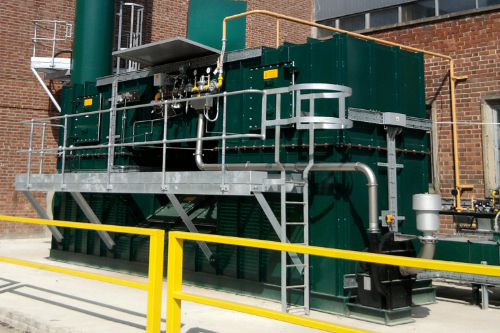
A global printer was suffering from excessive energy use across multiple printing lines, where solvent-based inks were being dried using warm air dryers. Exhausts from those dryers were being destroyed in a regenerative thermal oxidiser, but the system was running far harder than it needed to.
Process Energy carried out a full benchmarking exercise, measuring solvent loading, airflows, and energy interaction across the existing drying systems.
First, the dryers’ air balance was optimised and the heat source switched to an indirect thermal oil system. This reduced the volume of fumes sent to the oxidiser by 60%, cutting operating costs significantly and increasing solvent concentration to the point where the thermal oxidiser could run without support fuel. The excess heat from the oxidiser was then captured via a thermal oil heat recovery system and used to heat the print dryers, delivering a further layer of savings.
The results speak for themselves:
- £530,000 in cost savings per year
- 3,920,000 kWh/year reduction in energy consumption
- 752 tonnes of CO2e removed annually
- ROI achieved in under two years
The Bigger Picture
Solvent control is a significant step forward, but it’s rarely the only energy efficiency opportunity in a print factory.
Across our client base, printers have achieved annual savings ranging from £100,000 to over £500,000, typically with a return on investment of under three years.
If you’re using solvent-based inks or coatings without clear visibility over your consumption, there’s always savings to be had.
Talk to our team about a solvent monitoring assessment or energy analysis for your print facility.