

Solvent monitoring instruments measure the concentration of solvent vapour in your process air in real time, so dryers or ovens can be controlled safely without wasting energy. It also enables optimisation of the process, minimising waste energy.
It’s a legal requirement for many solvent-based processes to monitor LEL and one of the simplest ways to cut the running cost of process heating.
Process Energy designs and installs solvent monitoring systems as part of the wider thermal process, not an afterthought.
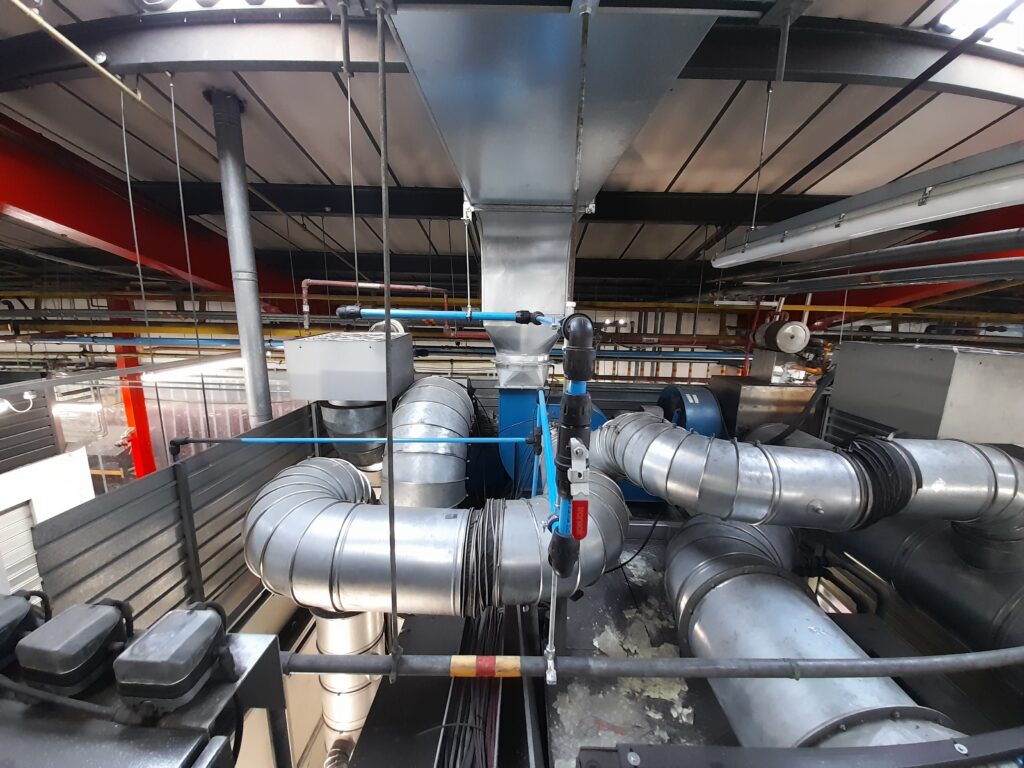
LEL, or lower explosive limit, is a key measure for solvent-based manufacturers.
To operate safely and comply with BS EN 1539:2015, you need support to design and maintain your LEL sensors to properly measure the process and control risks. LEL monitoring systems are only as good as their last calibration. Wear, clogging, and age all chip away at accuracy over time.
Our engineers assess your process needs and for existing installations:
Keeping your site safe and your system compliant.
Safety: To maintain operational safety for high-solvent load processes and to respond to product variability, continuous LEL sensors are key to maintaining process control and safety. A cascade of alarms gives an early warning before the ‘High Level’ alarm stops the process, to prevent unsafe explosive mixtures from occurring in the oven or dryer.
Compliance: Most solvent-based coating, printing, and drying processes fall under the Industrial Emissions Directive and are often administered by Local Authorities, ensuring dryers and ovens releasing flammable substances meet sector regulation within the UK (SG6 LAPPC as Part B activities).
Energy: Without accurate monitoring, dryers often have excessive exhaust airflows. Fresh air needs to be heated to replace the exhausted air, increasing the heat loads and costs. Large exhaust airflows from solvent dryers are often sent to thermal oxidisers for environmental abatement, incurring further energy use and costs.
By using solvent monitoring to optimise the process, airflows and energy use can be cut, creating major savings.
See where your solvent monitoring stands against sector regulations, and where the energy savings are.
It’s the continuous measurement of solvent vapour concentration in process air, usually expressed as a percentage of the lower explosive limit (LEL), so ventilation can be controlled safely.
Most solvent-based processes are regulated under DSEAR/ATEX and the Industrial Emissions Directive, covering processes including printing, printing of flexible packaging, and more. Dryers releasing flammable substances are also expected to meet BS EN 1539:2015. A full process risk assessment is needed to ensure safe operation.
Without accurate monitoring, dryers are typically over-ventilated as a safety margin. That extra air has to be heated and often treated through an oxidiser, so tighter monitoring reduces both.
Lab-scale monitoring is a different process challenge from a manufacturing line, with different resolution, accuracy, flexibility and robustness.
Our expertise is in evaluating the process and selecting the most appropriate monitoring for the drying, coating, and printing processes
It starts with understanding your process, including solvent loads, temperatures and airflow across the line, then specifying sensors and alarm thresholds to suit the process and safety requirements. The system is then installed and integrated with your existing ventilation, dryers, or oxidiser, so it’s monitoring and responding to live production continuously, not checking periodically.
The right system depends on your process rather than any single “best” product. What matters is the process conditions and process safety risk assessment, which may include the need for SIL 2 specification and compliance with BS EN 1539:2015. All our designs and installed systems are specified for your line rather than fitted as an off-the-shelf product.